? Quick Facts from Prof. Dr. Göçer
- An adjustable prosthesis for children is a special endoprosthesis used to compensate for leg length discrepancies in children who have had their growth plates removed due to a bone tumor.
- Most bone sarcomas (approximately 84% osteosarcoma, 15% Ewing sarcoma) occur around the knee and affect children during their growth phase (systematic review, 2025).
- With magnetic (non-invasive) lengthening systems, the prosthesis can be gradually lengthened externally without the need for surgery.
- Limb-sparing surgery can now be safely performed in more than 90% of cases of extremity sarcomas.
A bone tumor in a growing child requires a specialized solution that simultaneously addresses both the removal of the tumor and the child’s continued growth. Growth-adjustable prostheses (endoprostheses) in children are smart implants that replace the section of bone removed due to the tumor and can be lengthened as the child grows.
What Is an Extendable Prosthesis for Children?
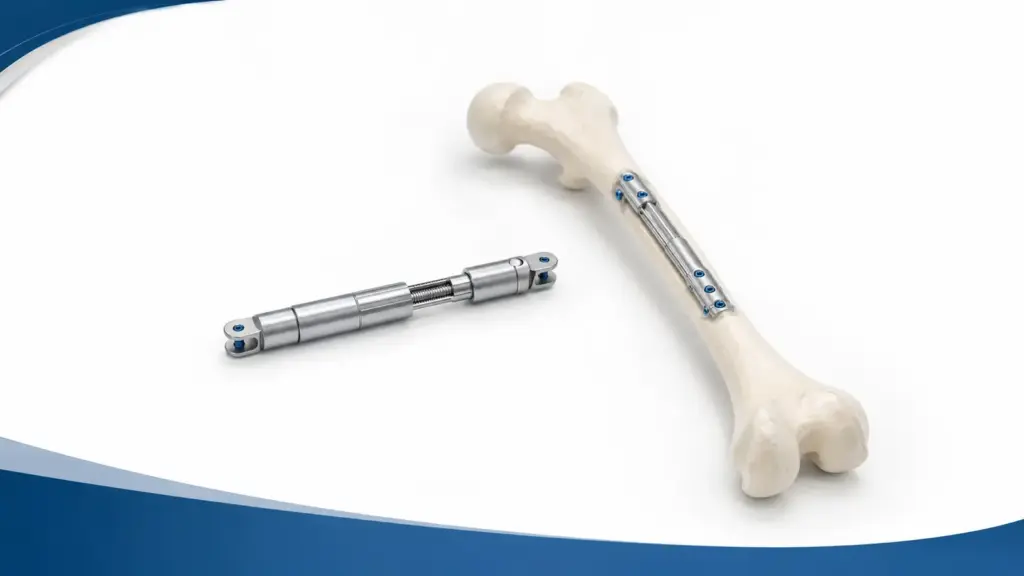
An extendable prosthesis for children is a special type of endoprosthesis that replaces the bone and growth plate removed along with the tumor during bone tumor surgery and can be lengthened as the child grows. The goal is both to remove the tumor within safe margins and to minimize any potential length discrepancy with the opposite leg, which continues to grow.
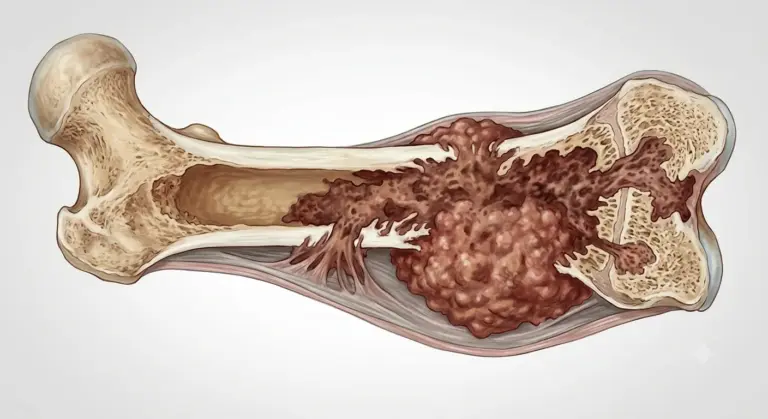
Bone sarcomas most commonly occur around the knee (the lower end of the femur and the upper end of the tibia). This region also contains two important growth plates that enable the leg to grow. When these plates are removed along with the tumor, the operated leg stops growing, while the opposite leg continues to grow. This is why endoprostheses are designed to compensate for this difference.
According to Prof. Dr. Hasan Göçer, unlike in adults, the selection of prostheses for pediatric patients must take into account not only the “current” but also the “future” leg length; therefore, adjustable prostheses hold a special place for children with growth potential.
Adjustable Prosthesis Treatment in Children
Extendable prosthesis treatment in children is typically conducted as part of bone tumor treatment, in conjunction with chemotherapy and tumor surgery. There are two main types of systems based on their extension mechanism.
| Prosthesis Type | Lengthening Method | Features |
|---|---|---|
| Non-invasive (magnetic) extendable prosthesis | Using an external magnetic field, without surgery | Extension sessions are performed in an outpatient setting, without requiring surgery |
| Surgically extendable endoprosthesis | With a minor procedure | Minor surgeries may be required for lengthening |
Non-surgical systems represent a significant advancement in terms of the child’s comfort, as they do not require surgery for lengthening. The amount and timing of lengthening are planned based on the child’s growth rate and the difference in length between the affected and unaffected legs.
In Which Cases Is It Used?
Adjustable prostheses are most commonly used in children diagnosed with bone sarcoma (osteosarcoma, Ewing sarcoma) who have undergone limb-sparing surgery. Children in whom a significant leg length discrepancy is expected once growth is complete are the group that benefits most from this prosthesis.
- A diagnosis of bone sarcoma (osteosarcoma, Ewing sarcoma)
- The tumor involves the growth plate and requires resection
- Expectation of a significant leg length discrepancy after growth
- Suitability for limb-sparing surgery
How Does the Treatment and Lengthening Process Proceed?
The lengthening process for an adjustable prosthesis is not a one-time procedure but a process that progresses in parallel with the child’s growth. In magnetic systems, lengthening is performed in short outpatient sessions and is typically non-surgical. One study reported that these prostheses were lengthened by an average of 4.2 cm and that in a significant proportion of patients, the leg length discrepancy could be kept below 2 cm (long-term follow-up study, 2020).
Prof. Dr. Göçer emphasizes that the success of this process in clinical practice depends on the child’s and family’s adherence to regular follow-up visits; because timely completion of lengthening sessions is key to maintaining balance with the opposite leg.
Clinical Assessment by Prof. Dr. Hasan Göçer
“In my clinical practice, I view the lengthening prosthesis in pediatric patients not so much as an ‘implant’ but rather as a treatment process that grows alongside the child. The primary goal is to safely remove the tumor; however, the ultimate objective is for the child’s two legs to be as equal in length as possible once growth is complete, enabling them to lead a normal life. For this reason, we closely monitor these children for years, until their growth is complete.”
Prof. Dr. Hasan Göçer — Orthopedic and Traumatology Specialist
The practical significance of this assessment is that treatment for pediatric patients does not end with surgery. An adjustable prosthesis requires a monitoring and lengthening plan that will continue throughout the child’s growth; this process is carried out in a way that supports both the child’s physical and emotional development.
From Diagnosis to Recovery: How Does the Process Proceed?
| Stage | Time | What Happens? |
|---|---|---|
| Diagnosis & Evaluation | First few days | Tumor diagnosis via imaging and biopsy; the child’s growth potential is assessed |
| Oncological Treatment | Pre-surgery | Tumor is brought under control with chemotherapy as needed |
| Surgery | Scheduled day | The tumor is removed with safe margins; an expandable endoprosthesis is implanted |
| Recovery & Rehabilitation | Weeks | Movement and walking are regained through physical therapy |
| Lengthening Phase | Throughout growth | Gradual lengthening sessions and regular checkups in parallel with growth |
Diagnosis and Evaluation: The tumor type is determined through imaging and biopsy. The child’s age and growth potential form the basis for prosthesis planning.
Oncological Treatment and Surgery: In bone sarcomas, surgery is usually performed in conjunction with chemotherapy. During surgery, the tumor is removed with safe margins, and an appropriate endoprosthesis is implanted.
Recovery and Limb Lengthening: Mobility is restored through physical therapy; this is followed by a limb lengthening phase that progresses in parallel with the child’s growth. This phase can continue until the child has finished growing.
Frequently Asked Questions
Does the child feel pain during lengthening sessions?
Since lengthening with non-invasive (magnetic) lengthening prostheses is performed using an external magnetic field and is typically done without surgery, the procedure is generally well tolerated. Some children may experience mild tightness or temporary discomfort during lengthening. The amount of lengthening is planned gradually, taking the child’s comfort into account.
Does an extendable prosthesis prevent a child from playing sports?
Children with adjustable prostheses can eventually return to many daily activities and light sports; however, contact sports and high-impact sports are generally not recommended, as they may put strain on the prosthesis. The doctor determines which activities are appropriate based on the type of prosthesis and the child’s recovery status.
What happens to the prosthesis once growth is complete?
Once growth is complete, the need for lengthening ends. At this point, the lengthening prosthesis can often be replaced with an adult-type permanent prosthesis, or monitoring can continue with the existing prosthesis. The decision is made on a case-by-case basis, depending on the child’s bone structure, the condition of the prosthesis, and leg length.
How do a growing child’s bone structure and growth plates affect this prosthesis selection?
As long as a child’s growth plates are open, the leg continues to grow. When a growth plate is removed due to a tumor, growth in that leg stops, and a difference in length develops between that leg and the opposite leg. Therefore, the child’s age, remaining growth potential, and the location of the growth plates are the key factors in selecting a lengthening prosthesis.
How is limb-sparing surgery performed in children with bone cancer (osteosarcoma, Ewing sarcoma)?
In limb-sparing surgery, the tumor is removed along with the surrounding healthy tissue within safe margins, and the resulting bone defect is repaired using an endoprosthesis, a graft, or other methods. In growing children, this reconstruction can be performed using a long-leg prosthesis. It is reported that in more than 90% of extremity sarcomas today, the limb can be preserved. The process is usually carried out in conjunction with chemotherapy.
Conclusion
In this article, we discussed what an extendable prosthesis (endoprostheses), the conditions under which they are used, and how the lengthening process proceeds. These prostheses are an important option that enables both limb preservation and the maintenance of leg length balance in children undergoing treatment for bone tumors during their growth phase.
To assess your specific situation regarding lengthening prostheses for children, you can begin the evaluation process. Prof. Dr. Hasan Göçer evaluates each patient’s clinical case individually to determine the most appropriate treatment options.
References
- Tang N et al. Development and clinical application of extendable prostheses in limb salvage surgery for primary malignant bone tumors in children: a systematic review. Bone & Joint Research / NIH PMC, 2025 — https://pmc.ncbi.nlm.nih.gov/articles/PMC12187429/
- Long-term outcomes of limb-salvage treatment with custom-made extendible endoprostheses for bone sarcoma around the knee in children. Journal of Orthopaedic Surgery and Research / NIH PMC, 2020 — https://pmc.ncbi.nlm.nih.gov/articles/PMC6966891/
- Overview of Limb Salvage Surgery for Bone Tumors. BoneTumor.org (source: Musculoskeletal Tumor Society) — http://www.bonetumor.org/overview-limb-salvage-surgery-limb-sparing-surgery-bone-tumors