? Quick Facts from Prof. Dr. Göçer
- Hip replacement, is a technically more challenging type of hip replacement surgery performed in cases of osteoarthritis that develops at an early age due to developmental hip dysplasia.
- Developmental hip dysplasia (DDH) is one of the leading causes of early-onset hip osteoarthritis in adults.
- Because the acetabulum is shallow and inadequate in dysplastic hips, prosthesis planning is tailored to the individual patient; sometimes bone grafts and special components are required.
- Properly planned hip replacement surgery aims to resolve long-standing pain and correct leg length discrepancy.
A congenitally shallow or malpositioned hip joint wears down prematurely over the years due to abnormal loading and can lead to advanced osteoarthritis even at a young age. Hip replacement for hip dysplasia is a surgical procedure performed to treat osteoarthritis associated with this developmental disorder—commonly known as dysplasia—and requires more detailed planning than a standard hip replacement.
What Is Hip Replacement for Hip Dysplasia?
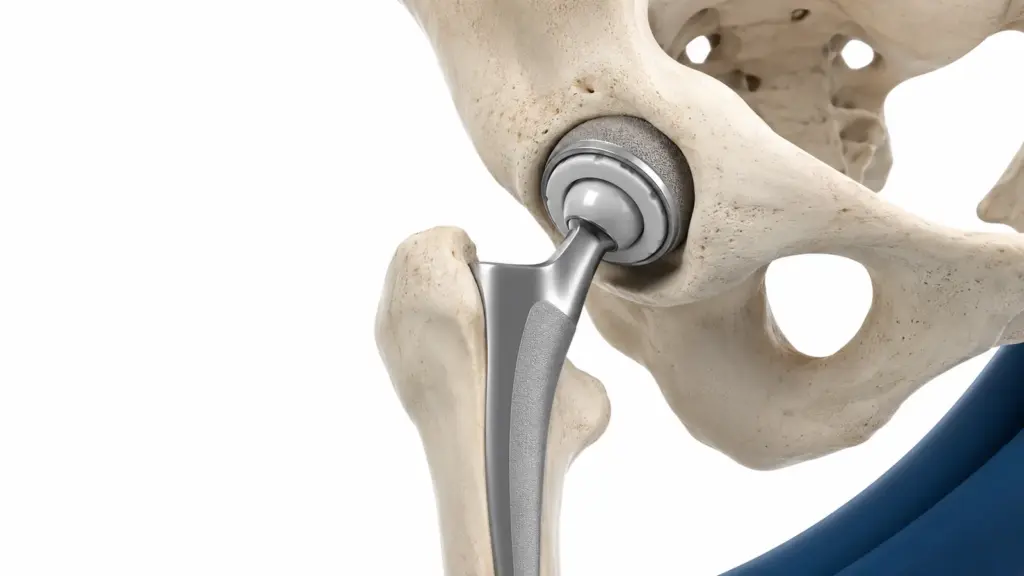
Hip replacement for hip dysplasia is a total hip replacement surgery performed on a joint that has been compromised due to congenital hip dysplasia (developmental hip dysplasia). The underlying issue here is the hip socket (acetabulum) in the pelvic bone has not developed to sufficient depth, and the head of the femur does not fit properly into this shallow socket.
This anatomical abnormality leads to uneven loading of the joint surfaces and premature wear of the cartilage. As a result, patients experience hip osteoarthritis and pain at a younger age than most people. Treatment of dysplasia If the condition has progressed to advanced osteoarthritis in adulthood, hip replacement surgery is usually the only way to permanently resolve pain and loss of function.
According to Prof. Dr. Hasan Göçer, osteoarthritis developing on a background of dysplasia should be approached differently from ordinary hip osteoarthritis; because the shallow joint socket, a shortened leg, and altered bone anatomy make prosthesis planning inherently patient-specific from the outset.
Symptoms of Hip Prosthesis Dislocation
In cases arising from dysplasia, it is important to recognize the symptoms of both osteoarthritis and potential prosthesis dislocation. Symptoms of hip prosthesis dislocation manifest as sudden, severe pain and loss of mobility in a patient who has undergone hip replacement.
- Sudden and severe pain in the hip
- Leg shortening or abnormal rotation (inward/outward)
- Inability to put weight on the foot or walk
- Sudden sensation of locking during hip movement
If these symptoms appear, you should seek immediate medical attention; a hip prosthesis dislocation is a condition that requires early and proper intervention. In the preoperative period, it manifests as osteoarthritis due to dysplasia, groin pain, limping, and a leg length discrepancy.
Hip Dislocation Replacement Surgery
Hip dislocation prosthesis surgery requires more detailed planning than standard hip replacement due to dysplastic anatomy. A shallow acetabulum can make it difficult to securely place the prosthetic cup; and correcting leg length discrepancy also requires careful balancing.
- Detailed preoperative imaging (X-ray, CT if necessary) is used to map the bone structure
- Bone grafts are sometimes used to support a shallow socket
- Special prosthetic components tailored to the dysplastic anatomy may be selected
- Leg length discrepancy is balanced while taking nerve tension into account
Prof. Dr. Göçer emphasizes that in his clinical practice, preoperative planning for prosthetic surgeries performed in cases of dysplasia is just as critical as the surgery itself. Detailed imaging and preoperative measurements help minimize potential challenges during surgery.
Prof. Dr. Hasan Göçer’s Clinical Assessment
“In my clinical practice, I observe that most patients with hips that have calcified due to dysplasia have noticed for years that one of their legs is shorter and that they have been limping. The goal in these patients is not merely to relieve pain; it is to reposition the joint socket on a balanced foundation and equalize theleg lengths as possible. Every dysplastic hip is unique; therefore, preoperative planning directly determines the outcome.”
Prof. Dr. Hasan Göçer — Orthopedic and Traumatology Specialist
The practical significance of this assessment is that hip replacement surgery performed in the context of dysplasia cannot be treated as a standard procedure. Since each patient’s bone anatomy is different, preoperative measurement and planning both reduce the risk of dislocation and increase long-term success.
From Diagnosis to Recovery: How Does the Process Proceed?
| Stage | Time | What Happens? |
|---|---|---|
| Initial Examination | Day 1 | Physical examination, leg length discrepancy, and gait assessment; hip X-ray ordered |
| Evaluation & Planning | Weeks 1–3 | Mapping of dysplastic anatomy via X-ray and, if necessary, CT; customized prosthesis plan |
| Surgery | Scheduled day | General/spinal anesthesia; prosthesis tailored to the dysplastic socket; bone graft performed as needed |
| Hospital Stay | Days 2–5 | Supervised weight-bearing, pain management, monitoring of nerves and circulation, discharge |
| Recovery | Weeks 6–12 Weeks | Gradual weight-bearing, physical therapy, guidelines for preventing dislocation, and follow-up visits |
Initial Examination: History of dysplasia, leg length discrepancy, and limping are evaluated in detail. X-rays show the depth of the acetabular socket and the degree of osteoarthritis.
Evaluation and Planning: Three-dimensional evaluation is important in cases of hip dysplasia. CT scans aid in the detailed planning of the shallow socket and bone support.
Surgery and Hospital Stay: When a bone graft or special component is used, the weight-bearing protocol is tailored to the individual. Leg alignment is performed with great care due to the risk of nerve compression.
Recovery: Adherence to physical therapy and guidelines for preventing dislocation determines the long-term outcome. Follow-up examinations monitor the fit of the prosthesis and graft.
Frequently Asked Questions
Note: The questions below have been addressed in a manner appropriate to the topic of “prosthesis for hip dislocation (dysplasia).”
What is hip dysplasia (dislocation)?
Hip dysplasia is a condition in which the socket of the hip joint is congenitally shallow and underdeveloped. Because the head of the femur does not fit completely into this shallow socket, the joint is subjected to uneven stress and the cartilage wears down prematurely. This sets the stage for hip osteoarthritis at a young age.
Why might an early hip replacement be necessary in cases of dysplasia?
Because a shallow joint socket places an uneven load on the joint, the cartilage wears down faster than normal. For this reason, osteoarthritis and the associated pain may develop at a younger age in individuals with dysplasia than in most people. In cases of advanced osteoarthritis, a hip replacement becomes the option that permanently resolves the pain.
Is hip replacement surgery for hip dysplasia different from standard hip replacement?
Yes. In dysplastic hips, the acetabulum is shallow and the bone anatomy is altered, so prosthesis planning is patient-specific. In some patients, a bone graft or special prosthesis components are required to support the acetabulum. For this reason, the surgery requires more detailed preparation than a standard hip replacement.
Is hip replacement surgery successful in cases of dysplasia?
Properly planned hip replacement surgery aims to relieve long-standing pain caused by dysplasia and to balance leg length as much as possible. The outcome varies depending on the degree of osteoarthritis, bone structure, and the patient’s overall condition. Consult an orthopedic specialist for an individual assessment.
How can hip prosthesis dislocation be prevented?
Avoiding excessive hip flexion, crossing your legs, and rotating the leg inward during the first few weeks after surgery reduces the risk of dislocation. Adherence to the physical therapy program and attention to positioning guidelines are particularly important for patients with dysplastic anatomy. In the event of sudden, severe pain or loss of movement, seek immediate medical attention.
Conclusion
In this article, we discussed what hip replacement surgery for hip dysplasia entails, its symptoms, how the procedure differs from standard hip replacement, and the recovery process. The key to success in dysplastic hips is patient-specific preoperative planning.
You can begin the examination process to assess your personal situation regarding hip replacement for hip dysplasia. Prof. Dr. Hasan Göçer evaluates each patient’s clinical presentation individually to determine the most appropriate treatment options.
References
- Vaquero-Picado A et al. Developmental dysplasia of the hip: update of management. EFORT Open Reviews / NIH PMC, 2019 — https://www.ncbi.nlm.nih.gov/pmc/articles/PMC6771074/
- Evans JT et al. How long does a hip replacement last? A systematic review and meta-analysis. The Lancet, 2019 — https://www.thelancet.com/journals/lancet/article/PIIS0140-6736(18)31859-2/fulltext
- Aboulenain S, Brent LH, Saber AY. Primary Osteoarthritis. StatPearls, NIH/NCBI Bookshelf, 2026 — https://www.ncbi.nlm.nih.gov/books/NBK557808/