🦴 Quick Facts from Prof. Dr. Göçer
- Knee revision surgery is a second surgical procedure performed to replace a previously implanted knee prosthesis when it begins to cause problems.
- The main causes include loosening of the prosthesis, infection, wear of the plastic component, instability, and fracture.
- It is reported that approximately 10% of patients with knee replacements may require revision at some point; the 10-year revision rate is approximately 5%.
- Revision is a more complex procedure than the primary (initial) replacement, and recovery generally takes longer.
Although knee replacements are long-lasting, no prosthesis guarantees a lifetime of trouble-free use. Knee revision surgery is a surgical procedure performed when a previously implanted knee prosthesis loses its function due to loosening, infection, or wear and tear, involving the removal of the old prosthesis and the placement of a new one. The goal is to relieve pain and restore knee function.
What Is Knee Revision Surgery?
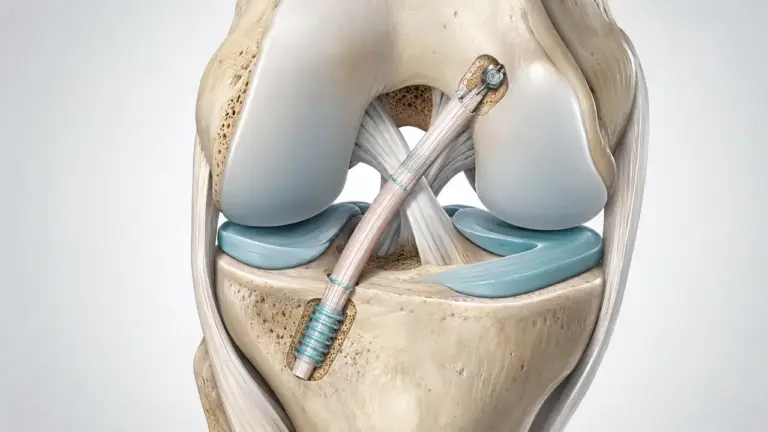
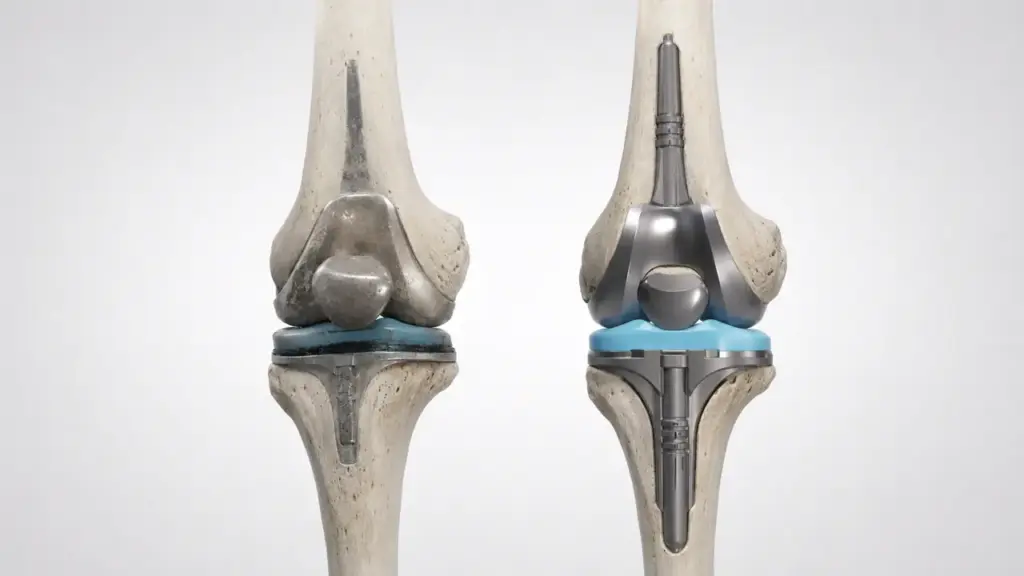
Knee revision arthroplasty is a second surgical procedure in which part or all of a functioning knee replacement is removed and replaced with new components. It is more complex than the initial (primary) knee replacement surgery; this is because the old prosthesis must be removed, any resulting bone loss must be repaired, and the knee must be restored to a stable condition.
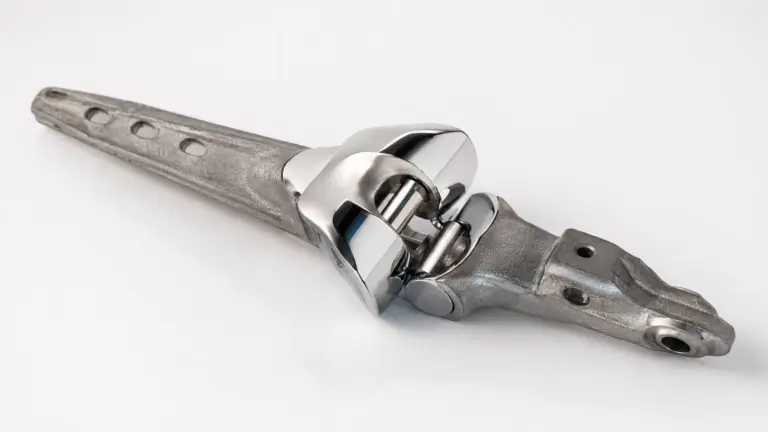
This procedure often involves the use of specialized revision implants, long-stem components, metal supports, or bone grafts. In some cases, only the loosened component is replaced, while in others, all components may need to be replaced to ensure proper knee function.
Why Is Knee Revision Surgery Necessary? (Reasons)
There are several reasons that may require the replacement of a knee prosthesis. The main reasons for knee revision surgery are as follows:
- Loosening: The bond between the prosthesis and the bone weakens over time; this is one of the most common causes.
- Infection: An infection developing around the prosthesis that requires separate treatment; it is one of the most serious complications.
- Wear: The gradual wear and tear of the plastic (polyethylene) component.
- Instability: A feeling of instability in the knee or a complaint of “giving way.”
- Fracture: A fracture in the bone surrounding the prosthesis (periprosthetic fracture).
- Stiffness: Inability of the knee to bend and straighten sufficiently.
According to Prof. Dr. Hasan Göçer, the cause of pain must be thoroughly investigated before deciding on revision surgery; in particular, when loosening is detected, infection must also be ruled out, as the treatments for these two conditions are entirely different.
Symptoms of Knee Revision Surgery
When a problem develops with the prosthesis, the body gives various warning signs. The following symptoms may indicate that the prosthesis needs to be evaluated:
- New or increased pain: This is the most common symptom; it can be felt in any part of the prosthesis.
- Swelling: Recurrent or persistent swelling in the knee.
- Loss of function: Limping, stiffness, or reduced range of motion.
- Feeling of instability: A sensation that the knee is unreliable or gives way.
- Signs of infection: Symptoms such as redness, increased warmth, or fever require urgent evaluation.
These symptoms do not always mean that revision is necessary; however, they may indicate a problem with the prosthesis. Early evaluation is important for both an accurate diagnosis and an appropriate treatment plan.
How Is the Need for Knee Revision Surgery Determined?
Determining the need for revision requires a multi-step evaluation. The goal is to clearly identify the source of the problem (loosening, infection, wear, etc.).
- Examination and medical history: The nature of the pain, its onset, and the course of symptoms are evaluated.
- X-ray: The position of the prosthesis, signs of loosening, and bone condition are examined.
- Blood tests: Markers are checked to assess the likelihood of infection.
- Joint fluid analysis: In appropriate cases, a sample may be taken from the joint to rule out infection.
- Advanced imaging: Scintigraphy or other methods may be used as needed.
When loosening is detected, investigating for infection is a standard step; because the treatment for infection-related loosening differs from that for mechanical loosening. An accurate diagnosis determines whether revision surgery will be performed in a single stage or in multiple stages.
Clinical Assessment by Prof. Dr. Hasan Göçer
“In my clinical practice, I emphasize that the success of revision surgery depends largely on an accurate diagnosis. A revision performed without clearly identifying the cause of the pain may not resolve the problem. For this reason, I place great importance on ruling out infection and on preoperative planning.”
Prof. Dr. Hasan Göçer — Orthopedic and Traumatology Specialist
The importance of this approach stems from the fact that revision surgery is a complex procedure. A properly planned revision provides significant pain relief and functional improvement in most patients. However, the outcomes may not be as predictable as those of the initial joint replacement surgery; therefore, an experienced team and thorough preparation are of critical importance.
How Is Knee Revision Arthroplasty Performed?
Knee revision replacement surgery is performed under general or regional anesthesia and may take longer than the primary surgery. The procedure involves removing the old prosthesis, evaluating the bone and surrounding tissues, and implanting new components.
- Anesthesia: The appropriate anesthesia method is administered to the patient.
- Removal of the old prosthesis: The problematic component(s) are carefully removed.
- Evaluation: Bone loss and the condition of the tissues are examined.
- Repair and placement: If necessary, a new prosthesis is placed using a bone graft or metal support.
- Closure: The incision is closed after checking for balance and stability.
In revision surgeries due to infection, the procedure is sometimes performed in two stages: first, the infected prosthesis is removed and the infection is treated; then, a new prosthesis is implanted in a separate surgery. This approach aims to permanently eliminate the infection.
Knee Revision Prosthesis Recovery Process
The recovery process for knee revision replacement is generally longer than that for primary replacement surgery. Depending on the complexity of the procedure and the underlying cause, a return to daily activities occurs within a few months for most patients; full recovery may take longer.
- Early phase (first few days): Standing up and walking with support begin under the guidance of a physical therapist.
- First weeks: Exercises to increase range of motion and muscle strength are performed.
- First months: A gradual return to daily activities is facilitated.
- Later stage: Recovery may take longer than with a primary prosthesis; patience and regular physical therapy are important.
The course of recovery varies depending on the reason for revision, the degree of bone loss, and the patient’s overall condition. In cases of revision due to infection, the process may take longer. Regular participation in physical therapy is the most important factor determining the long-term outcome.
From Surgery to Recovery: How Does the Process Proceed?
| Stage | Time | What Happens? |
|---|---|---|
| Evaluation | Pre-surgery | The cause of pain is investigated, infection is ruled out, and a plan is made |
| Surgery | Day of the procedure | The old prosthesis is removed, the bone is repaired, and the new prosthesis is implanted |
| Early Recovery | First Few Days | Standing and walking begin with physical therapy |
| Physical Therapy | Weeks–months | Mobility and muscle strength are gradually increased |
| Follow-up | Long-term | The prosthesis is monitored through regular checkups |
Evaluation and Surgery: The cause of the pain is investigated and infection is ruled out; during surgery, the old prosthesis is removed and a new one is implanted.
Recovery and Physical Therapy: Walking begins in the early stages; mobility and strength are gradually regained. The process may take longer than with a primary prosthesis.
Follow-up: The condition of the prosthesis is monitored through regular follow-up visits over the long term.
Frequently Asked Questions
Why is a knee replacement replaced?
A knee prosthesis may need to be replaced due to loosening, infection, wear of the plastic component, instability, or a fracture in the surrounding bone. The most common causes are loosening and infection. The decision to replace the prosthesis is made after the cause of the pain has been thoroughly investigated.
Is knee revision surgery difficult?
Revision is a more complex procedure than the initial knee replacement surgery because it involves removing the old prosthesis, repairing bone loss, and restabilizing the knee. Therefore, it requires an experienced team and detailed preoperative planning.
How long does recovery from knee revision arthroplasty take?
Recovery generally takes longer than with a primary knee replacement. Most patients return to their daily activities within a few months; full recovery may take longer. The duration varies depending on the reason for the revision and the extent of bone loss.
When does a knee replacement require revision?
New or worsening pain, recurring swelling, a feeling of instability, or signs of infection may warrant an evaluation for revision. It is reported that approximately 10% of patients with knee replacements may require revision at some point. The final decision is made based on examination and diagnostic tests.
Conclusion
Knee revision arthroplasty is a more complex surgical procedure than primary surgery, performed to replace a knee prosthesis that has lost its function due to loosening, infection, or wear and tear. The key to success lies in accurately identifying the cause of pain and, in particular, ruling out infection. A properly planned revision provides significant pain relief and improved function in most patients; recovery, however, requires patience and regular physical therapy.
You can begin the consultation process to evaluate your specific situation regarding knee revision arthroplasty. Prof. Dr. Hasan Göçer evaluates each patient’s clinical presentation individually to determine the most appropriate treatment options.
Sources
- Hospital for Special Surgery (HSS), “Knee Revision — When a Knee Replacement Must Be Replaced,” 2025 — https://www.hss.edu/health-library/conditions-and-treatments/list/knee-revision
- Brigham and Women’s Hospital, “Revision Total Knee Replacement” (~10% revision rate) — https://www.brighamandwomens.org/…
- NCBI/PMC, “Trend Shift in the Cause of Revision Total Knee Arthroplasty over 17 Years” (10-year ~5% revision rate) — https://pmc.ncbi.nlm.nih.gov/articles/PMC10060782/